
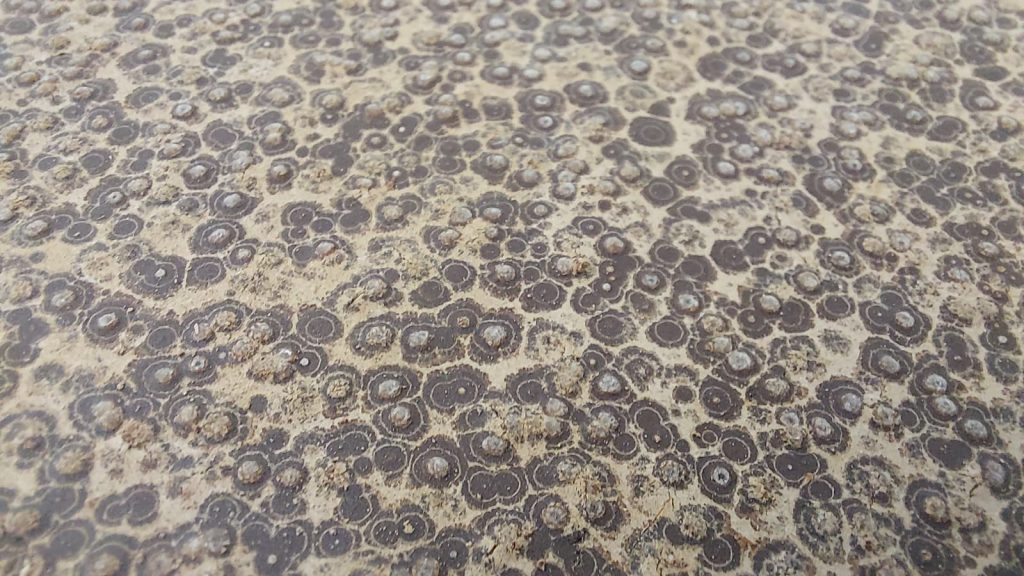
When you buy a chocolate bar, you expect it to be smooth and shiny. But I'm sure that at some point, you've bought a chocolate bar and noticed white marks on it. What are they? And, more importantly, do they affect the quality of the chocolate?
Although these white marks can sometimes go so far as to affect the texture, they're not usually a sign that you should throw your chocolate away. Normally, they arise due to changes in temperature or humidity, or an improper tempering process.
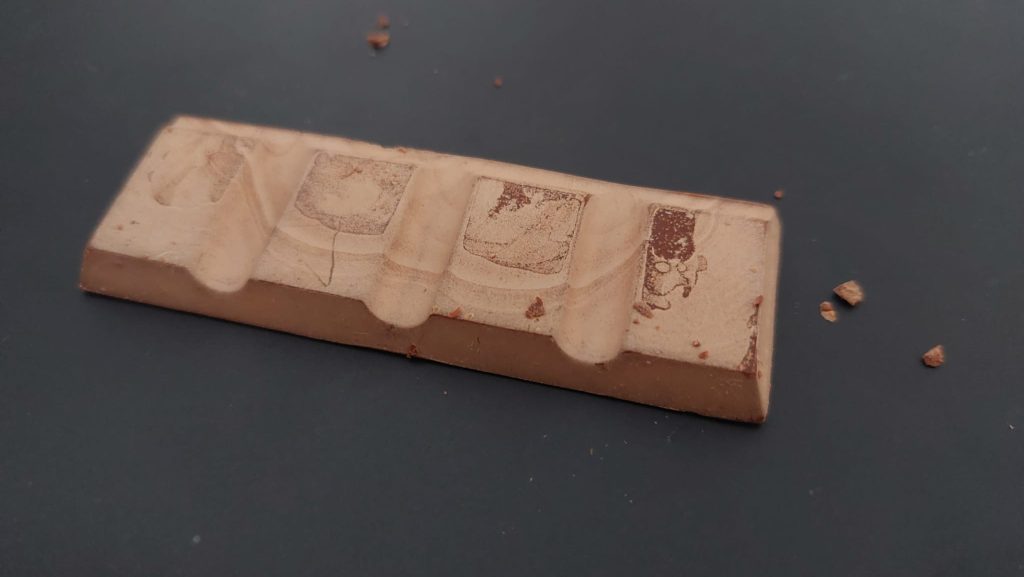
Fat bloom
Chocolate primarily owes its structure to the cocoa butter, which crystallizes in different ways depending on temperature, movement and time. The cocoa butter crystals dictate the structure and therefore the texture of the chocolate. When chocolate is heated to more than 32 degrees, the crystals melt. If we leave this chocolate to cool down on its own without teaching it what kind of crystals we want, it will form unstable crystals. These unstable crystals evolve over time and cause white marks to appear.
Fat bloom on chocolate is a fairly common occurrence in grocery stores that don't have air conditioning. In the summer months, the chocolate sits on shelves with temperatures over 30 degrees, where it starts to melt. Since it's already packaged, the chocolatier isn't able to temper it, and so the fat bloom stays. Chocolate with fat bloom is perfectly safe to eat, but you might notice that when you break it, it's soft and brittle and doesn't make the sharp snap of well-tempered chocolate.
You can check if the white marks on your chocolate are due to fat bloom by simply touching it. The heat from your hand will melt the cocoa butter crystals, and the marks will disappear.
Sugar bloom
In addition to cocoa butter, chocolate also contains sugar, distributed more or less uniformly throughout the chocolate mass. Sugar is very attracted to humidity, so if we expose the chocolate to a humid environment, the sugar absorbs the moisture and this changes the distribution of the sugar. This also causes white marks on your chocolate, often in clusters of little dots.
That's why we recommend against storing chocolate in the fridge. Sugar bloom isn't harmful, but it does affect the appearance of your chocolate and it can make it sticky, since the sugar is clumping up on the outside. If it's really hot in your house and you have no choice but to store the chocolate in the fridge, the best option is to store it in an airtight container. When you take it out of the fridge, leave the airtight container on the counter without opening it for about 10 to 20 minutes, until the chocolates are about the same temperature as the room and there's no visible condensation on the outside of the container. Only then do we recommend opening the box, and you can be fairly sure the chocolate won't absorb moisture from the shock of cold vs. hot air.
Mechanical abrasion
Chocolate bars tend to be carefully packaged to avoid scratches and other damage, but if you've ever bought a bag of chocolate chips for baking, you'll have noticed they're covered in white marks. These marks are simply the result of the chocolate chips moving inside the bag and rubbing against each other. There's not much you can do to protect against this type of white marks, apart from carefully package the product. However, rest assured that just like the other types of white marks that we've discussed so far, these are not dangerous and they don't affect the quality or the taste of the chocolate.
How can I fix the white marks on chocolate?
As we've discussed, fat and sugar bloom don't affect the safety or taste of a chocolate bar. Still, if you prefer your chocolate to be shiny and snappy, you can temper it again.
Chocolate tempering, also called precrystallization, is done by melting chocolate and bringing it back down to a solid state following a series of calculated steps to ensure the correct crystal formation. Normally, chocolate is fully melted by bringing it to at least 45 degrees, and then rapidly cooled by bringing it down below 32 degrees while stirring or moving it on a marble table. These actions help "seed" the chocolate with a small percentage of correct crystals. With around 1% of these crystals, the rest of the cocoa butter takes its cue and falls in line like soldiers, causing the chocolate to set hard and glossy as we want.
Mastering chocolate tempering requires a bit of practice, so we'll delve deeper into that topic in another article.
Mould
On rare occasions, chocolate can sprout mould. This only happens if the chocolate has been exposed to humidity, because chocolate on its own doesn't contain water and so it lacks the growing conditions for Life As We Know It.
The most common reason for chocolate to go mouldy is if it's absorbed moisture from being stored in a fridge. It's also possible to see mould in a filled chocolate bar or bonbon made with liquid ingredients, such as cream or fruit purée. That's why we stress the importance of respecting the expiry date listed on our bonbon boxes. We take care to formulate our recipes to guarantee the fillings will be shelf-stable within the stated limits, but the bonbons are still a fresh and therefore perishable product, as opposed to a solid chocolate bar that never really expires.